
1
Allah — the One God
Muslims believe Allah is the Creator and Sustainer of everything, perfect in knowledge and power, without partner, child or equal. Worship is directed to Him alone.
A clear and welcoming introduction to what Muslims believe, how Islam is practised, and where its teachings come from — whether you are exploring Islam for the first time or reconnecting with your faith.
The word Islam means submission to God, bringing with it a sense of peace; a Muslim is one who submits to God. Islam centres on worshipping one God — Allah — and living with faith, responsibility, compassion and purpose. Muslims believe God has guided humanity through prophets throughout history, including Adam, Noah, Abraham, Moses, Jesus and, finally, Muhammad ﷺ.
“Say: He is Allah, the One. Allah, on whom all depend. He does not beget, nor was He begotten, and there is none comparable to Him.”Qur'an 112:1–4 (Sūrat al-Ikhlāṣ)
Muslims believe Allah is the Creator and Sustainer of everything, perfect in knowledge and power, without partner, child or equal. Worship is directed to Him alone.
Muslims believe Allah created angels who obey Him and carry out duties entrusted to them. Jibrīl — Gabriel — brought revelation to God's prophets.
Muslims believe God sent revelation to His messengers, including the Scrolls given to Abraham, the Tawrāh (Torah) given to Moses, the Zabūr (Psalms) given to David and the Injīl (Gospel) given to Jesus. The Qur'an is believed to be God's final revealed scripture.
Muslims believe prophets were sent throughout history to call people to worship God and live righteously. Muhammad ﷺ is believed to be the final prophet and messenger.
Muslims believe earthly life is temporary and that every person will return to God and be held accountable. God judges with perfect justice and mercy.
Muslims believe Allah has complete knowledge and authority over creation. Human beings still make meaningful choices and are responsible for those choices.
Muslims honour Jesus — ʿĪsā in Arabic — as the Messiah and one of God's greatest messengers. Muslims believe in his miraculous birth and hold him in deep respect, but worship God alone rather than Jesus.
Worship in Islam is not confined to a mosque. Prayer is central, but everyday acts — caring for family, honest work, charity, learning and helping others — can also become acts of worship when done sincerely for God.
The declaration that there is no deity worthy of worship except Allah, and Muhammad is the Messenger of Allah.
Five daily prayers that reconnect a Muslim with God throughout the day.
Today's prayer times →Obligatory annual charity of 2.5% on savings held above a minimum threshold (niṣāb) for a full lunar year, given to those in need.
Fasting in Ramadan from dawn to sunset for adults who are able, nurturing God-consciousness and self-discipline.
The pilgrimage to Makkah, required once in a lifetime for Muslims who are physically and financially able.
Sacred places →For someone beginning to learn about Islam, two foundations matter most: the Qur'an and the example of the Prophet Muhammad ﷺ.
Muslims believe the Qur'an is the word of Allah, revealed in Arabic to the Prophet Muhammad ﷺ through the Angel Jibrīl over approximately 23 years.
It speaks about God, worship, morality, family life, justice, previous prophets, the afterlife and humanity's relationship with its Creator.
The Sunnah is the teaching and example of the Prophet Muhammad ﷺ. Reports that preserve what he said, did or approved are known as hadith.
The Qur'an commands Muslims to pray; the Prophet's example teaches the community how that prayer is performed in practice.
Muslim scholars developed detailed methods for interpreting the Qur'an and Sunnah and applying their teachings to new situations. In mainstream Sunni legal scholarship, scholarly consensus (ijmāʿ) and analogy (qiyās) are also important principles within Islamic jurisprudence.
Hadith scholars also developed rigorous methods for examining chains of transmission, narrators and the content of reports, classifying narrations according to their reliability.Islam holds three mosques in special honour: Al-Masjid al-Haram in Makkah, the Prophet's Mosque in Madinah and Al-Masjid al-Aqsa in Jerusalem. The Prophet Muhammad ﷺ named them as the three mosques for which a special journey may be made. Each carries deep meaning for Muslims everywhere.
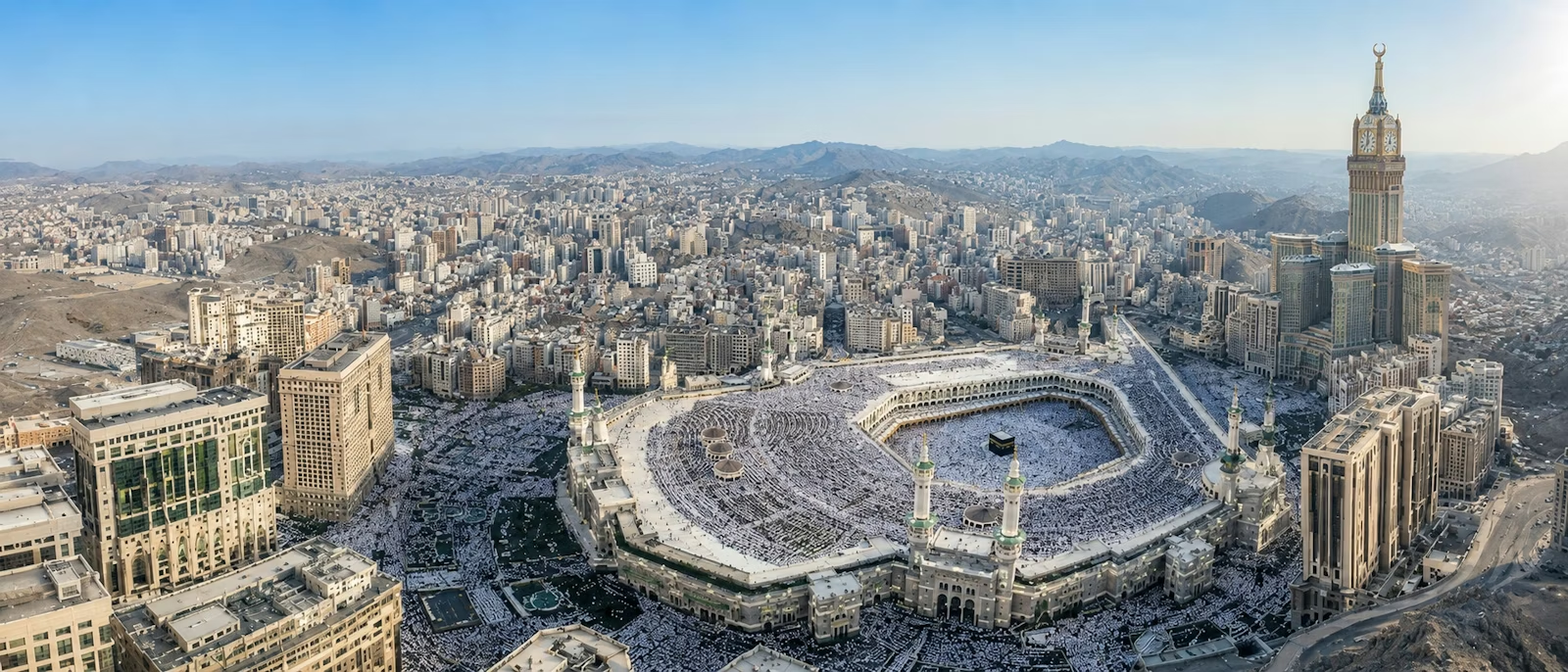
Home to the Ka'bah, the direction Muslims face in prayer and the centre of Ḥajj and ʿUmrah.
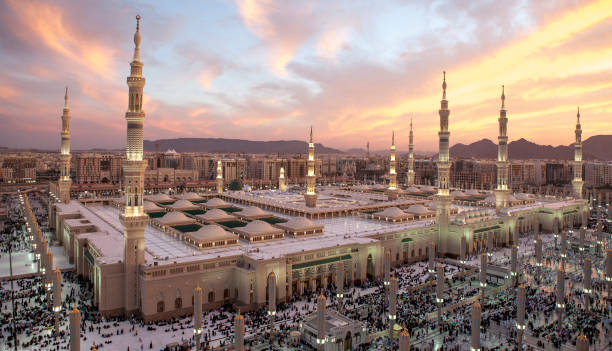
The Prophet's Mosque, built after the Hijrah and beloved as a centre of worship and learning.
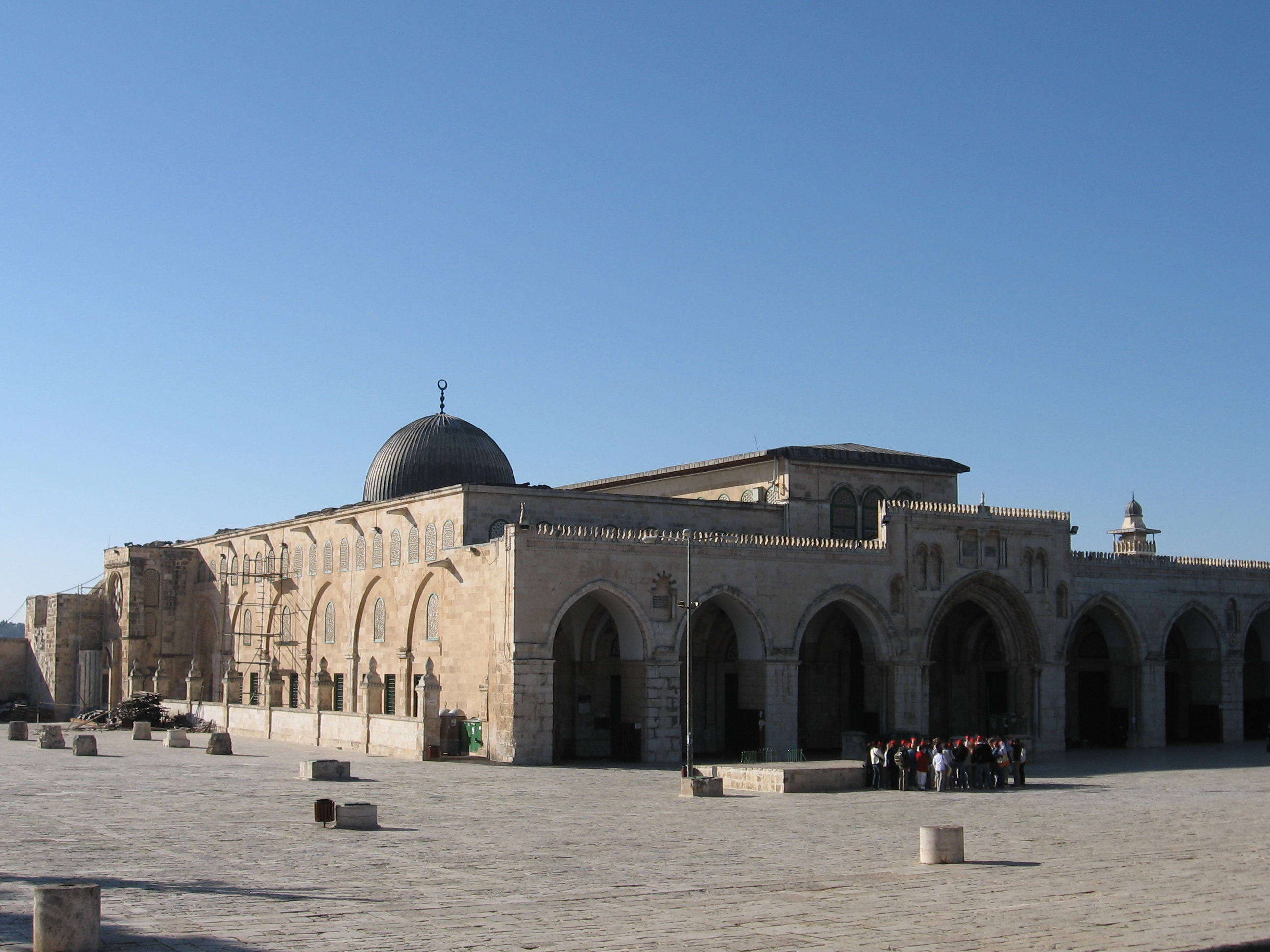
The blessed sanctuary of the Night Journey and the first qiblah of the Muslims.
Islam teaches that belief should be reflected in the way a person treats family, neighbours, strangers and wider society.
Whether you are simply curious, considering Islam, newly practising, or returning after some time away, Masjid al-Noor is here to help you learn without pressure.
Start with the basics, ask questions and get in touch to arrange a friendly visit.
Return at your own pace, learn, pray and speak confidentially with someone at the mosque.
No. “Allah” is simply the Arabic word for God. Arabic-speaking Christians also use the word Allah. Islam teaches worship of the one Creator of Abraham, Moses and Jesus.
Yes. Muslims believe Jesus was the Messiah, born miraculously to Mary, and one of God's greatest messengers. The major difference from Christianity is that Muslims do not worship Jesus or regard him as God.
A person becomes Muslim by sincerely declaring the Shahādah — that there is no deity worthy of worship except Allah, and that Muhammad is the Messenger of Allah. There is no fee, course or waiting period required. Many people choose to say it at the mosque with others present, and the community can then help with learning to pray and taking the next steps at a comfortable pace. If you are thinking about this, get in touch and we will arrange for someone to meet you.
Visitors are simply asked to dress modestly. Shoes are normally removed before entering the prayer area. If you are arranging a visit, the mosque can explain anything else in advance.
Absolutely. You are welcome to visit, observe, ask questions and take your time. There is no expectation that a visitor should already know Islamic terminology or practices.