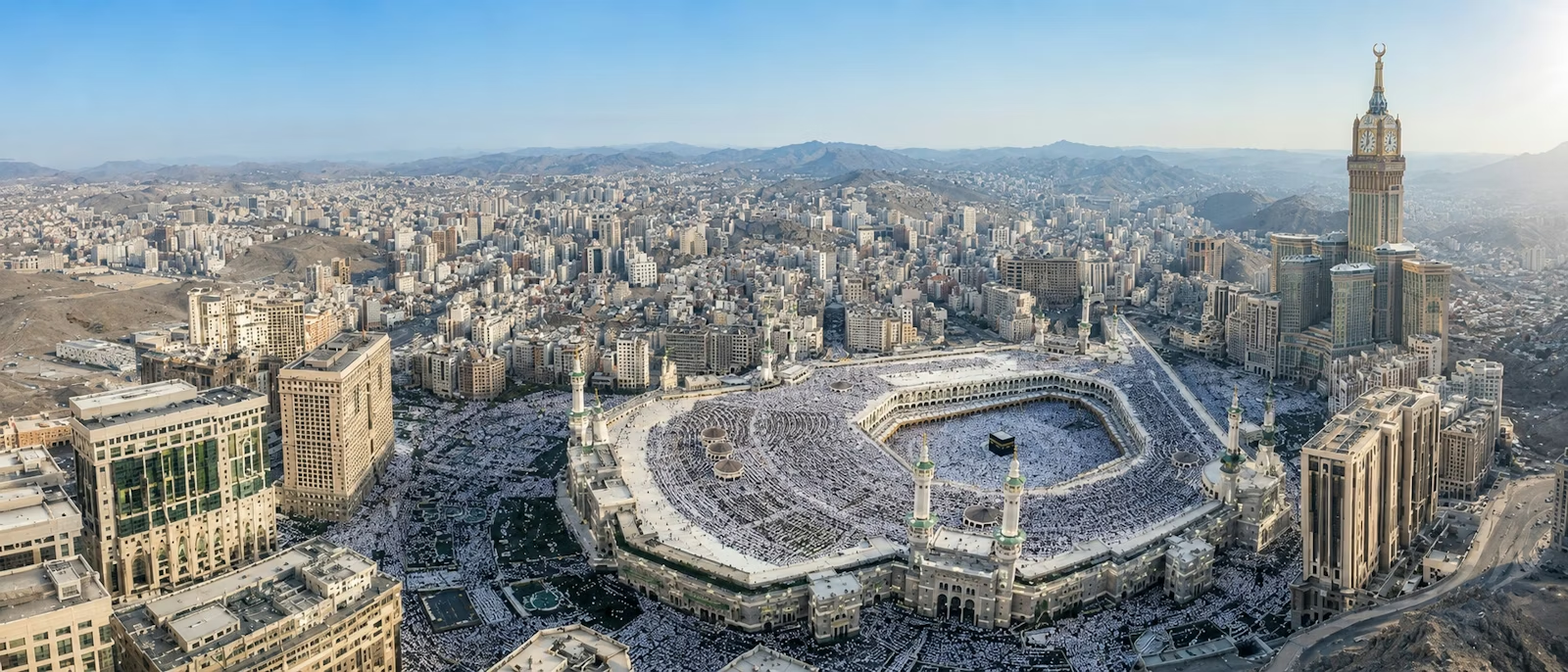
 01 · MAKKAH
المسجد الحرام
Al-Masjid al-Haram
The Sacred Mosque, home to the Ka'bah and the focal point of Muslim prayer throughout the world.
Explore Makkah →Three blessed sanctuaries. A shared spiritual heritage. Discover their virtues, their history and their enduring place in the heart of the Ummah.
The Prophet Muhammad ﷺ singled out these three mosques in an authentic narration. Each occupies a unique place in Islamic worship, memory and identity.
“Do not set out on a journey except for three mosques…”
01 · MAKKAHThe Sacred Mosque, home to the Ka'bah and the focal point of Muslim prayer throughout the world.
Explore Makkah →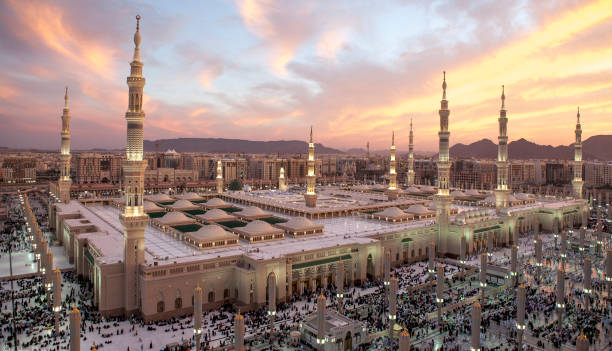 02 · MADINAH
The Prophet’s Mosque, established after the Hijrah and cherished by Muslims around the world.
Explore Madinah →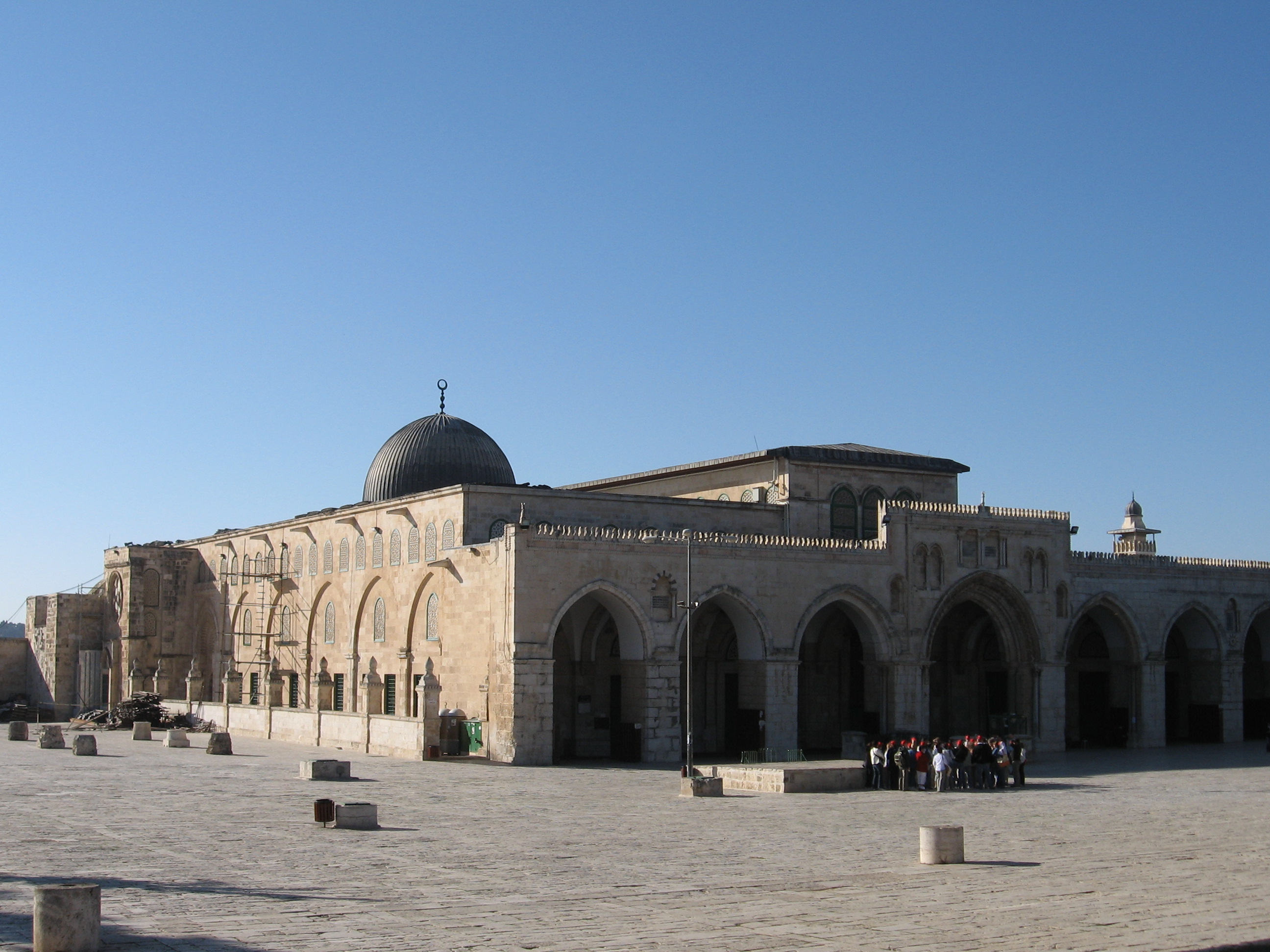 03 · JERUSALEM
The blessed sanctuary in Jerusalem, associated with the Isra and the first qiblah of the Muslims.
Explore Al-Aqsa →At the heart of Al-Masjid al-Haram stands the Ka'bah. Muslims face it for their daily prayers, and pilgrims gather around it during Hajj and Umrah. The Qur'an connects the Sacred House with the legacy of Prophet Ibrahim and his son Isma'il, peace be upon them.
The Ka'bah is a cube-shaped stone building at the centre of Al-Masjid al-Haram, covered in the black kiswah, a cloth embroidered with verses of the Qur'an in gold thread. The Qur'an describes it as the first house established for people (Qur'an 3:96) and links its foundations to Ibrahim and Isma'il (Qur'an 2:127). Muslims worship Allah alone: the Ka'bah is a unifying direction of prayer, not an object of worship.
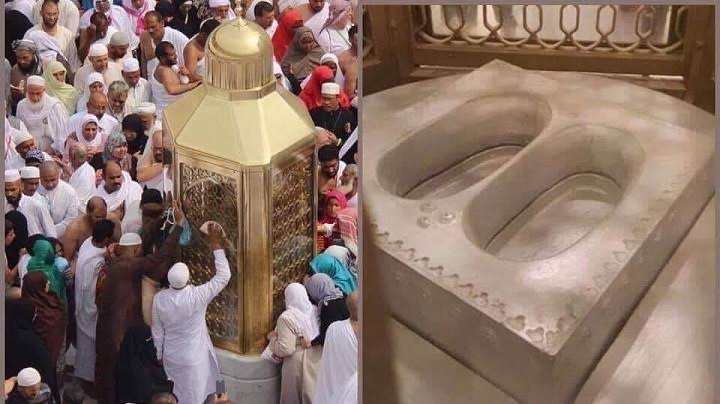
Maqam Ibrahim is a sacred stone, traditionally described as bearing the marks of Ibrahim's (AS) feet. Tradition says he stood on it while raising the walls of the Ka'bah. Today it is kept in a small glass and metal enclosure close to the Ka'bah, where pilgrims can see it. The Qur'an tells believers to take it as a place of prayer (Qur'an 2:125).
The Qur'an names the Station of Ibrahim as a place where believers are told to pray (Qur'an 2:125). It sits very close to the Ka'bah, so the area around it becomes crowded during Hajj and Umrah. This is why pilgrims are free to pray their two rakʿahs anywhere in the mosque with space, rather than pressing against the enclosure.
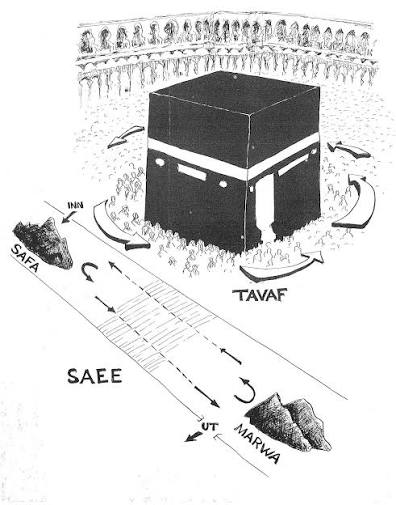
Safa and Marwah are two small hills beside the Ka'bah, named among the symbols of Allah (Qur'an 2:158). Pilgrims walk between them seven times, starting at Safa and ending at Marwah. This is ṣaʿī, in remembrance of Hajar's (AS) trust in Allah and her search for water for her son Isma'il (AS), after which Zamzam flowed (see Sahih al-Bukhari 3364).
After the Hijrah from Makkah to Madinah, the Prophet Muhammad ﷺ established his mosque as a centre of worship, learning and community. Madinah remains beloved to Muslims as the city of the Prophet ﷺ.
After years of hardship in Makkah, the Prophet Muhammad ﷺ migrated to Madinah, a city then known as Yathrib. This migration, the Hijrah, was a turning point: it gave the Muslims a home, a community and a mosque, and it became the starting point of the Islamic calendar.
Many of the Companions had already migrated. The Prophet ﷺ left Makkah quietly, in the company of Abu Bakr (RA).
The two sheltered in a cave for three days before continuing towards Madinah. The Qur'an refers to this moment (Qur'an 9:40).
The people of Madinah, the Ansar, welcomed the emigrants, the Muhajirun, and shared what they had (Qur'an 59:9). A well-known song of welcome, Ṭalaʿa al-Badru ʿalaynā, is traditionally linked to this moment. The Prophet ﷺ built his mosque as the centre of the new community.
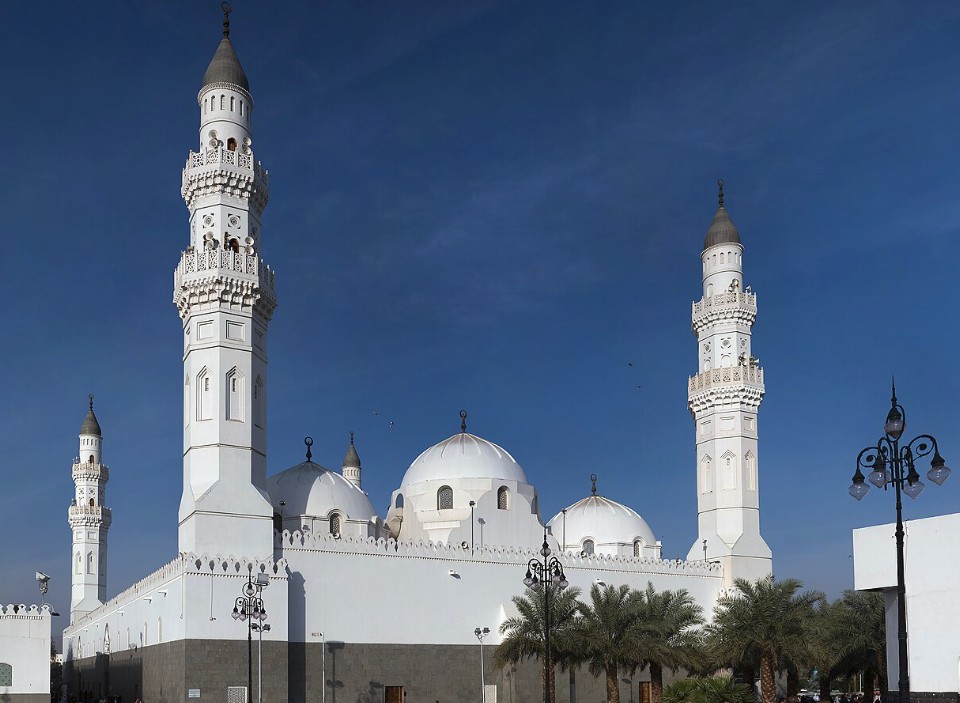
On reaching the edge of Madinah, the Prophet ﷺ stayed at Quba, where a mosque was built that is often described as the first mosque in Islam. Qur'an 9:108 speaks of a mosque founded on piety from the first day. Commentators connect this with Quba, and some narrations connect it with the Prophet's Mosque; both are discussed by scholars.
Under Caliph ʿUmar (RA), the Companions chose the Hijrah as the starting point of the calendar. The year of the Hijrah is 1 AH, and each new year begins on 1 Muharram. The calendar is lunar, with twelve months, and sets Ramadan, Hajj and the two Eids.
Before the Hijrah, Yathrib had known long years of tribal conflict and division. The arrival of the Prophet ﷺ brought hope, reconciliation and brotherhood. It is reported that the people of Madinah greeted him with joy, singing this welcome.
طَلَعَ الْبَدْرُ عَلَيْنَا
مِنْ ثَنِيَّاتِ الْوَدَاعِ
وَجَبَ الشُّكْرُ عَلَيْنَا
مَا دَعَا لِلَّهِ دَاعِ
أَيُّهَا الْمَبْعُوثُ فِينَا
جِئْتَ بِالْأَمْرِ الْمُطَاعِ
جِئْتَ شَرَّفْتَ الْمَدِينَةْ
مَرْحَبًا يَا خَيْرَ دَاعِ
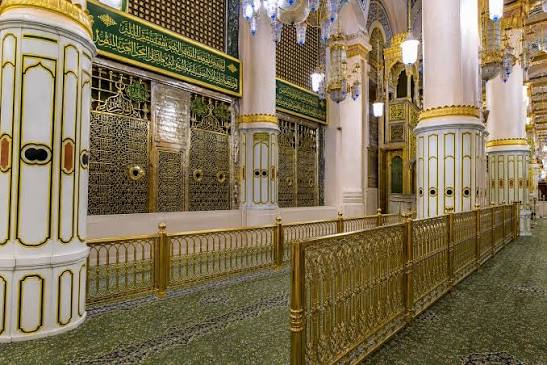
The area between the Prophet's former home and his minbar.
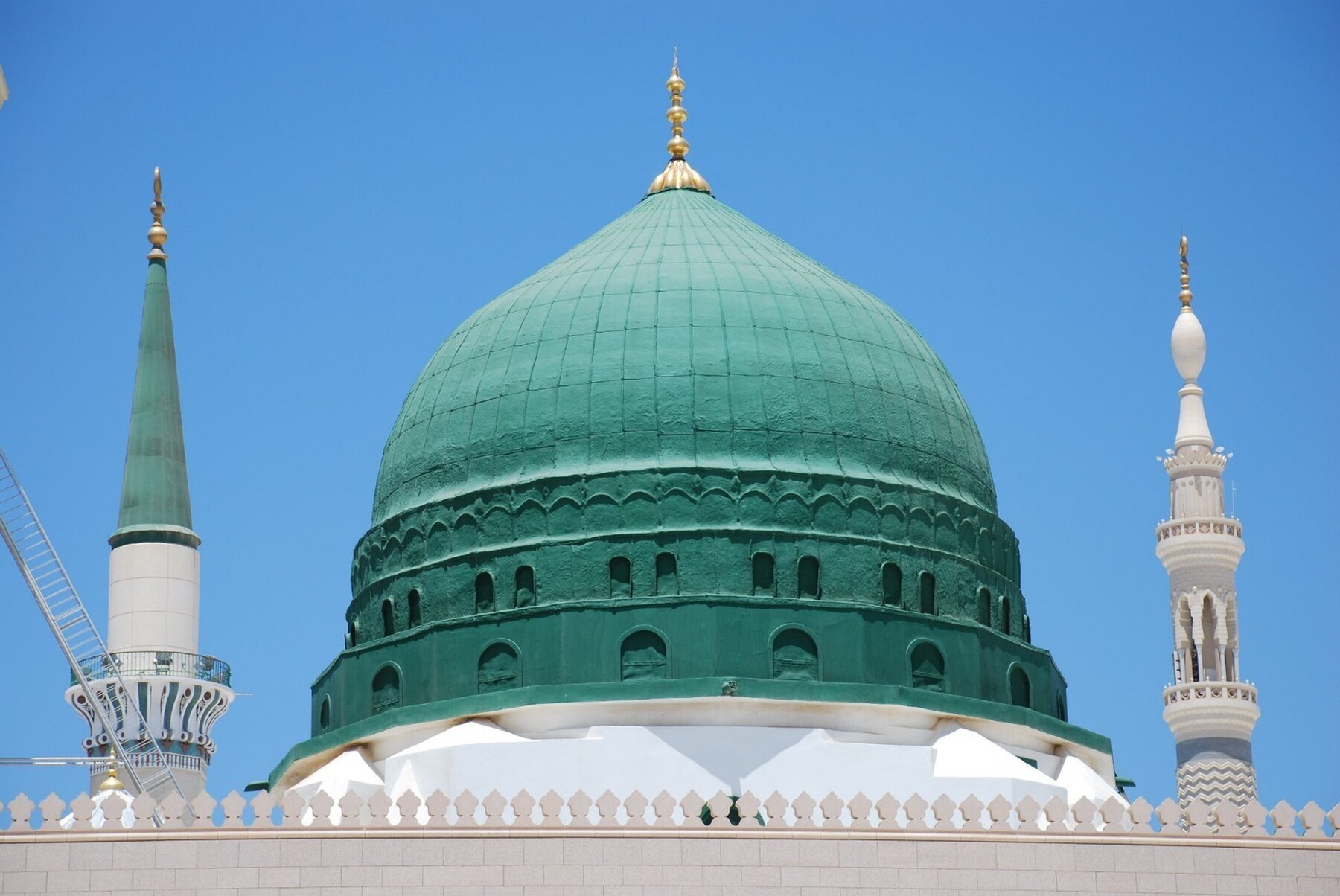
A recognisable architectural landmark of the mosque.
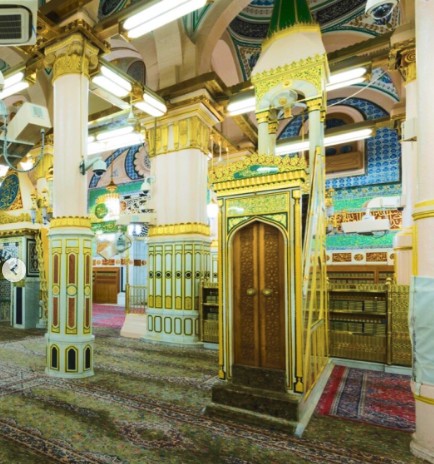
The pulpit associated with the Prophet's teaching and khutbahs.
A selection of major moments in Islamic tradition, arranged as a learning journey rather than a complete chronology.
The Qur'an links Ibrahim and Isma'il (AS) to the foundations of the Sacred House in Makkah. 2:127
The Qur'an mentions the Prophet's night journey from Al-Masjid al-Haram to Al-Masjid al-Aqsa. 17:1
The Prophet Muhammad ﷺ migrated to Madinah, where his mosque became a centre of the emerging Muslim community. It marks the start of the Islamic calendar.
The early Muslim community prayed towards Jerusalem before being directed towards Al-Masjid al-Haram. 2:144
Al-Masjid al-Aqsa holds a profound place in Muslim faith. It is associated with the Prophet's ﷺ Night Journey, is traditionally recognised as the first qiblah, and is cherished by Muslims across the world.
One night, before the Hijrah, the Prophet Muhammad ﷺ was taken on a miraculous journey that links the sacred mosques of Makkah and Jerusalem, and then carried far beyond them.
In a single night he was taken from Al-Masjid al-Haram in Makkah to Al-Masjid al-Aqsa in Jerusalem, carried on Al-Buraq, a swift heavenly creature sent for the journey. Surah Al-Isra opens with this event (Qur'an 17:1).
Authentic narrations report that he met earlier prophets and led them in prayer, a moment often reflected on as showing the shared message of the prophets.
From Jerusalem he ascended through the heavens and was shown some of the greatest signs of his Lord. The Qur'an alludes to this in Surah An-Najm 53:13–18.
Authentic narrations describe the ascent level by level. The Prophet ﷺ met Adam on the nearest heaven; Isa (Jesus) and Yahya (John) on the second; Yusuf (Joseph) on the third; Idris (Enoch) on the fourth; Harun (Aaron) on the fifth; Musa (Moses) on the sixth; and Ibrahim (Abraham), leaning against the Bayt al-Maʿmur, on the seventh. He was then shown Sidrat al-Muntāha, the Lote tree of the utmost boundary, marking the furthest point of the ascent. Sahih al-Bukhari 3207.
Fifty daily prayers were first enjoined. On Musa’s (AS) advice, the Prophet ﷺ returned again and again, until the number was reduced to five, kept equal in reward to fifty, a gift Muslims renew five times every day. Sahih al-Bukhari 349.
In common Islamic usage, Al-Masjid al-Aqsa refers to the wider sacred sanctuary (Al-Haram al-Sharif), including its open courtyards, the Qibli prayer hall with its dark dome, and the gold-domed Dome of the Rock. The Dome of the Rock is a distinct shrine within the compound; it is not the same building as the Qibli Mosque.
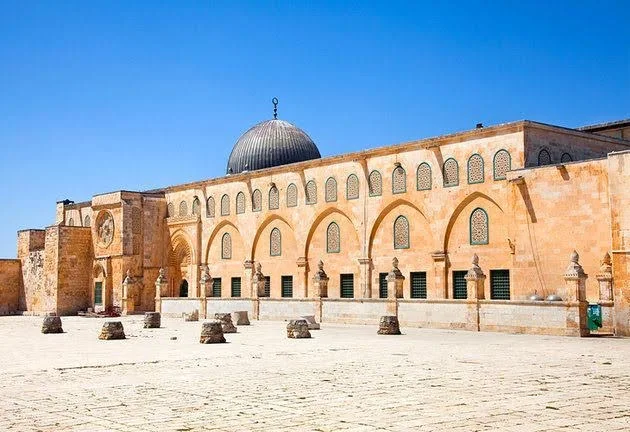
The Qibli Mosque is the large covered prayer hall at the southern end of the compound, the side facing the qiblah, which gives it its name. It is the building most often shown in photographs as “the Al-Aqsa Mosque”, and it is recognised by its dark grey dome. It is one part of the wider sanctuary. Jerusalem was the first qiblah of the Muslims before the direction changed to the Ka'bah (Qur'an 2:144), and the sanctuary is at the heart of the Night Journey (Qur'an 17:1).
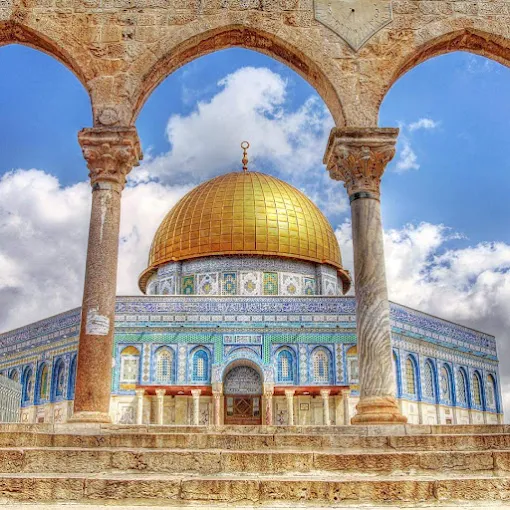
The Dome of the Rock is the octagonal shrine with the golden dome that dominates the skyline of the compound. It was completed in 691–692 CE under the Umayyad caliph ‘Abd al-Malik ibn Marwān. It is built around the Foundation Stone (al-Ṣakhra). It is a shrine, not the main congregational prayer hall, so it is a different building from the Qibli Mosque. Long Qur'anic inscriptions in Arabic run around its interior.
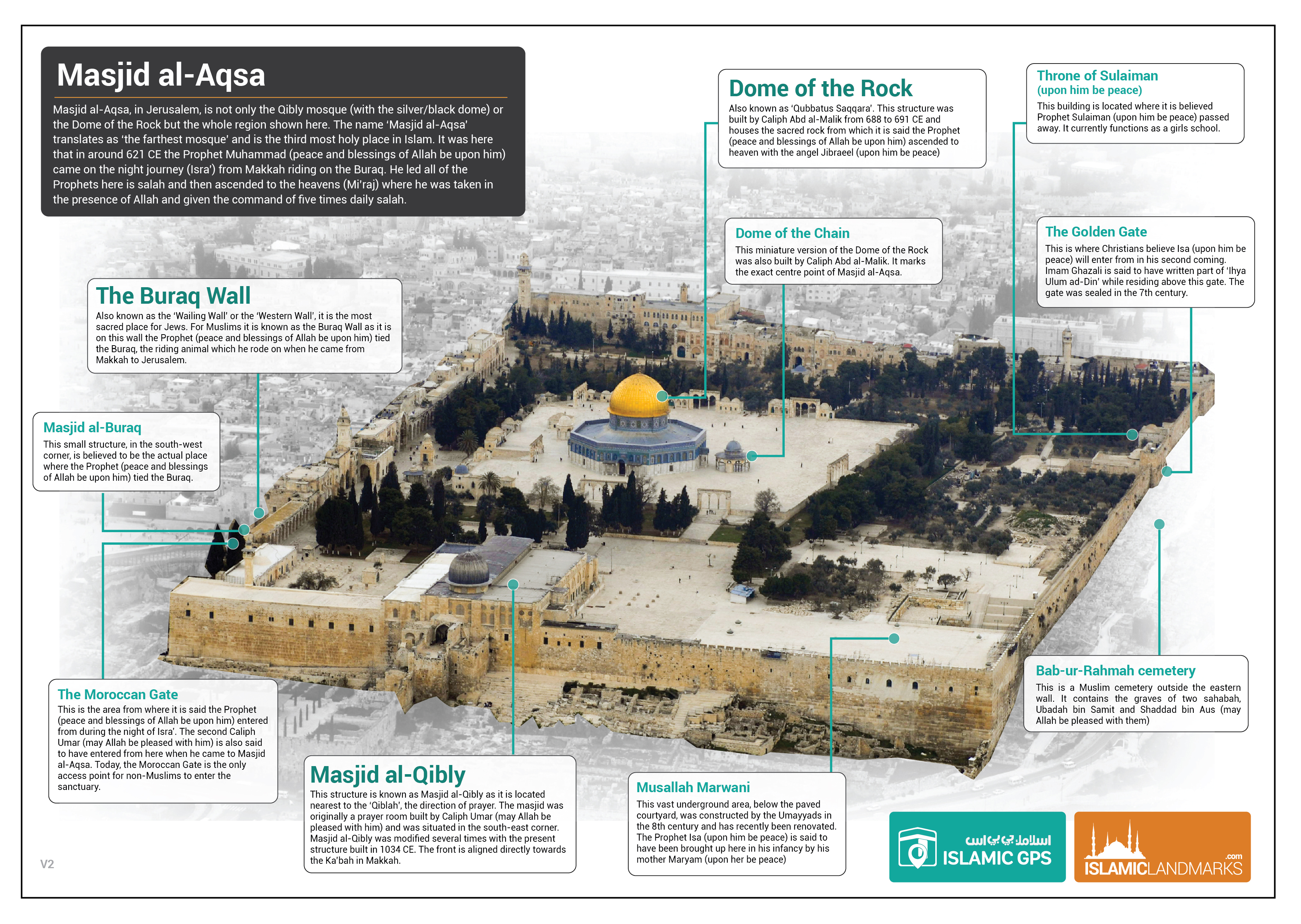
Al-Masjid al-Aqsa means the whole sanctuary: roughly 144 dunams (about 35 acres) of open courtyards, prayer halls, domes, arcades, fountains and gates. The Islamic Waqf and many scholars teach that the entire compound is Al-Masjid al-Aqsa, and that every part of it is sacred.
From the Prophet's ﷺ time to the present day, in brief.
The Prophet ﷺ is taken by night from Al-Masjid al-Haram to Al-Masjid al-Aqsa and then ascends through the heavens. Scholars discuss the exact date. For a period after the Hijrah, the Muslims pray towards Al-Aqsa, until the qiblah changes to the Ka'bah.
The city passes to the Muslims by negotiated surrender, with the Christian patriarch Sophronius dealing directly with Caliph Umar (RA). Reports describe a guarantee of safety for the people of the city and their places of worship.
The Umayyad caliph ʿAbd al-Malik completes the Dome of the Rock. Over the following centuries, successive Muslim rulers care for and develop the sanctuary.
Crusader armies take Jerusalem after a siege and kill a large part of its Muslim and Jewish population. The sanctuary is turned to Christian use, and the Dome of the Rock becomes a church.
After the Battle of Hattin, Salah ad-Din (Saladin) takes back Jerusalem. The city surrenders on negotiated terms, and the sanctuary returns to Muslim worship.
Jerusalem becomes part of the Ottoman Empire, which governs the city for around four centuries.
British forces enter Jerusalem in December, ending Ottoman rule. Britain then governs Palestine under a League of Nations Mandate. Earlier that year, the Balfour Declaration had expressed British support for a Jewish national home in Palestine, which the Arab population opposed.
The end of the Mandate is followed by war. The Nakba (“the catastrophe”) sees an estimated 750,000 Palestinians driven from, or forced to flee, their homes. Jerusalem is divided: the western part comes under Israel, while the Old City and Al-Aqsa come under Jordan.
In the June war, Israel takes East Jerusalem, including the Old City and the Al-Aqsa compound, and later annexes it, a step most countries do not recognise. Palestinians call the events of 1967 the Naksa (“the setback”). The Islamic Waqf continues to run the compound day to day, while Israel controls access.

In the decades since, Jerusalem and Al-Aqsa have remained at the heart of an ongoing conflict, with restrictions on access to the sanctuary and great suffering across Palestine. Muslims around the world continue to hold Al-Aqsa and its people in their hearts and duʿaʾ. Read our statement in Standing with the People of Palestine.
Our love for Palestine doesn’t stop at the gates of Al-Masjid al-Aqsa. It reaches the people of Palestine: their lives, their families, their homes, their heritage and their future.
Palestine holds deep spiritual and historical meaning for Muslims, but our concern for its people goes beyond faith and religious identity. It comes from justice, compassion, human dignity and the sanctity of life.
Masjid al-Noor and the Muslims of Lancaster stand firmly and unequivocally in solidarity with the Palestinian people. We affirm their right to freedom, dignity, safety and self-determination; their right to live without occupation, oppression, forced displacement or fear; and their right to build a peaceful, secure future in their homeland.
We remember the families who have lost loved ones, the children whose lives have been shaped by violence and displacement, and the generations who have held on to their identity, heritage and hope through enormous hardship.
Our faith teaches us that justice is not optional, that oppression must never be met with indifference, and that every innocent life is sacred. That calls for compassion in our words, integrity in our actions and a steady commitment to peace built on justice. Lasting peace is not possible without justice, freedom, accountability and respect for the fundamental rights of the Palestinian people.
Our solidarity is not hostility towards any people or faith. It is an affirmation of humanity, a rejection of injustice and a commitment to the equal dignity and safety of every innocent life.
We stand with Palestine. We stand for justice. We stand for the right of every Palestinian child to grow up in freedom, dignity, safety and peace.
May Allah protect the innocent, grant relief to those who suffer, comfort those who mourn, restore hope to the displaced, and bless the people of Palestine with justice, freedom and a lasting peace.
Ameen.
Supporting Palestinian communities can take many peaceful, practical forms. These external resources provide ways to understand humanitarian needs and contribute to relief.
Read about UNRWA's humanitarian work and donation routes for Palestine refugees.
Explore UNRWA ↗Read humanitarian reporting on the occupied Palestinian territory from the United Nations Office for the Coordination of Humanitarian Affairs.
Explore OCHA reporting ↗Remember families facing loss, hardship and displacement in your prayers. Ask Allah for protection, justice, relief and lasting peace.
Read our solidarity statement ↑External links are informational and are not presented as an endorsement of every statement or programme on those websites. Verify donation details before giving.
Five short questions about the three sacred mosques and their history.
The history of these sacred places reminds us of our shared faith, the legacy of the prophets and our responsibility towards one another.